Maxine Sullivan
Born Marietta Williams on May 13, 1911, in Homestead, Pennsylvania; died on April 17, 1987, in New York City; married John Kirby (divorced), married Cliff Jackson; children: Paula Morris, Orville Williams.
Maxine Sullivan was a jazz singer whose career spanned much of the twentieth century and took her from a Pittsburgh after-hours club to New York's hottest jazz clubs, to Hollywood, Broadway, and ultimately all over the world. She first appeared before an audience at the age of six when her grandmother signed her up to sing "I'm Forever Blowing Bubbles" at the public library. Sullivan recorded her first hit in 1937 and received her last Grammy nomination in 1986 at the age of 75. Unlike the popular jazz and blues singers of her time, Sullivan was known not for her big voice but for her smooth and intricate swing delivery--a style that served her well for more than 50 years.
Maxine Sullivan was born Marietta Williams in Homestead, Pennsylvania, on May 13, 1911. As early as she could remember, Sullivan was surrounded by music. Her father played the mandolin and one of her uncles was a bandleader. She took up singing at an early age and continued throughout high school, but her voice was different from many of the popular women singers of the day. The style of the jazz and blues singers of the early twentieth century was to belt out a song in a loud voice. In contrast, Sullivan sang with a softer swing style that was more intricate but less powerful. As a teenager she was included in her uncle's band, the Red Hot Peppers. She began singing the older more traditional songs and adapting them to the new swing style from the very beginning of her career, a practice which she would continue for the next 50 years in the music business.
Sullivan's first job as a professional singer came at the Benjamin Harrison Literary Club. Though the name sounded as if the establishment belonged on the campus of one of Pittsburgh's universities, it was really an illegal after-hours club that served liquor during the height of Prohibition. Sullivan told Los Angles Times jazz critic Leonard Feather about the club in a 1987 interview: "Actually the BHL Club had operated all through Prohibition, one of those 'Knock three times, who's there?' places, but after repeal it became a popular sportsmen's club where people would hang out after the legitimate clubs closed at 2 a.m.... I went to work at 11 p.m. and worked until unconscious, singing from table to table--you know, 99 choruses of "Dinah" or whatever. It was good experience, and it paid $14 a week plus tips. I stayed there for a year."
Sullivan got the job at a young age when her bandleader uncle introduced her to the owner of the club, and after a probationary period of just one week, she was hired as the club's singer. The speakeasy was a popular hangout for many jazz artists of the time, so Sullivan received valuable exposure. She met several members of the Chick Webb orchestra, as well as Gladys Mosier, a pianist in Ina Ray Hutton's band, one of the prominent New York Jazz combos of the time. Mosier urged Sullivan to strike out for the Big Apple, and arranged for a meeting with jazz composer Claude Thornhill in 1936.
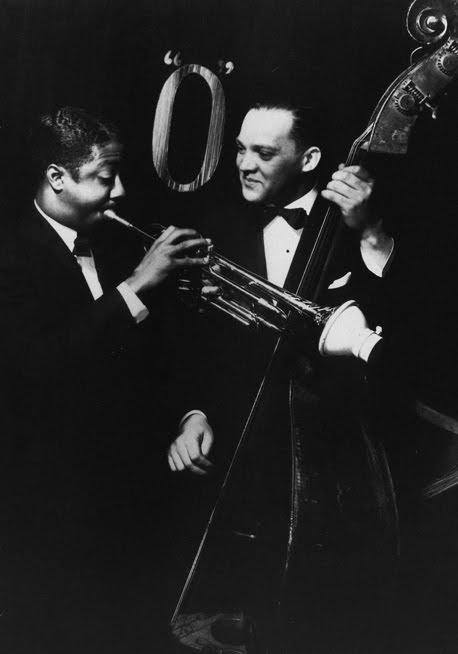
Sullivan moved to New York and began auditioning and singing anywhere she could get a job. She finally auditioned at the Onyx Club on 52nd Street and became the club's intermission entertainer for 40 dollars a week. She also met Thornhill, who realized that in order to record her unique voice, he could not use the blues and jazz standards that were popular at the time. He went back to the old folk songs, which suited Sullivan's voice and were part of the public domain, free from any royalty payments. On August 6, 1937, Sullivan recorded "I'm Coming, Virginia," "Annie Laurie," "Blue Skies," and the tune that would become her signature song, "Loch Lomond." The old Scottish favorite about journeying back to Scotland whether one was alive or as a spirit after death was transformed from a classic folk song into a swing number. Because the new jaunty type of music was applied to such a classic and solemn old song, many radio stations refused to play the recording. But even in the 1930s there was nothing like controversy if an artist wanted to sell a record, and Sullivan's "Loch Lomond" took off. Sullivan even appeared on the cover of Life Magazine.
She continued to record older folk songs such as "Darling Nellie Gray," "I Dream of Jeanie," "Drink to Me Only With Thine Eyes," and "If I had a Ribbon Bow.". Though none of these standards became a hit in the same way "Loch Lomond" had, Sullivan had carved out a niche for herself reworking older songs into modern swing numbers. Though the singer only received 25 dollars for her work in the studio and no royalties, her salary at the Onyx Club went from forty dollars a week to 80 and then to 150 dollars a week at the height of the Depression. When the music to the hit was published, the credit and a lot of the money for the song went, not to Sullivan or to John Kirby, whose band played on the record, but to Benny Goodman, who recorded the song after Sullivan had put it into the regular rotation on American radio.
Sullivan's recording of "Loch Lomond" launched her career in earnest. She appeared as the featured vocalist on CBS radio's Saturday Night Swing Club, and then headed west from New York to Hollywood to make movies. In 1938 she appeared in two films. In Going Places, starring Louis Armstrong and Ronald Reagan, she recorded "Jeepers Creepers," which would become another Sullivan standard. She also made a second film, St. Louis Blues, in which she sang the title track. She then married John Kirby, whom she had met at the Benjamin Harrison Literary Club and whose band played on the song that made her famous.
The following year she moved back to New York to appear on Broadway with Louis Armstrong and Benny Goodman. The performers appeared in Swinging the Dream, a jazz adaptation of Shakespeare's A Midsummer Night's Dream. In a 1985 interview with Leonard Feather at the Los Angeles Times, Sullivan reminisced about the historic production: "I played Titania and Louis Armstrong played Bottom. There was an incredible cast, with the Dandridge Sisters, Moms Mabley, Pearl Bailey's brother Bill, the dancer; and in boxes above either side of the stage we had the Benny Goodman sextet with Charlie Christian, and Bud Freeman's Summa Cum Laude Band. I sang the song from that show that became a standard, 'Darn That Dream.'" Though the ambitious project closed after ten days, Sullivan had recorded another hit.
As a singer Sullivan broadened her range and ventured toward pop music with recordings such as "I've Got the World on a String," "Wrap Your Troubles in Dreams," and "I Got a Right to Sing the Blues." Sullivan and Kirby also worked together on a radio program for CBS called Flow Gently, Sweet Rhythm. The program was the only African-American-hosted show on the radio, and it remained on the air for two years. Sullivan and Kirby divorced in 1941, as the jazz singer launched her own solo career. She toured England twice, in 1948 and 1954, and performed with Johnny Long and Glenn Miller. She also became firmly rooted in the New York jazz scene, appearing at Le Ruban Bleu for six years and then for the next four years at the Village Vanguard.
In 1950 Sullivan married again, to another man she had met at the Pittsburgh speakeasy where she began her career. Like her first husband, pianist Cliff Jackson was a member of Chick Webb's orchestra. In 1956 Sullivan retired from music to raise her daughter and spend more time at home. She studied to be a nurse and served as a school health counselor. The one-time speakeasy songstress became the president of the Parent-Teachers Association of P.S. 136 in the Bronx. But she kept her hand in the music world by learning to play the valve trombone and the flugelhorn.
About ten years after retiring from the music business, Sullivan found that she was slowly returning to it. In 1967 she was invited to sing as part of the opening of a Washington, D.C., nightspot called Blues Alley Club. After she received a taste of her old life, she returned to New York and joined Bobby Hackett's World's Greatest Jazz Band at the Riverboat Jazz Club, in what was to become a regular job for her. Again she went from the nightclub stage to Broadway, receiving a Tony Award nomination for her performance in the musical My Old Friends. She began to record again throughout the 1970s and 1980s and received Grammy Award nominations in 1982, 1985, and 1986. She also toured throughout Europe and Japan.
She continued to perform until the day of her death on April 7, 1987. She died of a seizure which hospitalized her and from which she did not recover. At the time of her death, the petite 76-year-old singer had just completed a run at the Roosevelt Hotel Cinegrill in Los Angeles, and was scheduled to return there in July. Critic Leonard Feather was present for her final performance at the Cinegrill. He offered this glimpse of Sullivan, still at the height of her powers even though her health was about to fail her: "The Sullivan sound remains one of those immutable wonders in which simplicity, understatement and a lightweight sound that matches the dimensions have always been the bench marks. Tilting her head slightly, stirring the air gently with her left hand, she brings to each song a sense of security that tells you how little she needs to change a phrase in giving it her personal imprimatur."" At the time of her death she was also scheduled to do a jazz cruise and a benefit in London, planning to continue the jazz life that she had known for more than 50 years.
Born Marietta Williams on May 13, 1911, in Homestead, Pennsylvania; died on April 17, 1987, in New York City; married John Kirby (divorced), married Cliff Jackson; children: Paula Morris, Orville Williams.
Maxine Sullivan was a jazz singer whose career spanned much of the twentieth century and took her from a Pittsburgh after-hours club to New York's hottest jazz clubs, to Hollywood, Broadway, and ultimately all over the world. She first appeared before an audience at the age of six when her grandmother signed her up to sing "I'm Forever Blowing Bubbles" at the public library. Sullivan recorded her first hit in 1937 and received her last Grammy nomination in 1986 at the age of 75. Unlike the popular jazz and blues singers of her time, Sullivan was known not for her big voice but for her smooth and intricate swing delivery--a style that served her well for more than 50 years.
Maxine Sullivan was born Marietta Williams in Homestead, Pennsylvania, on May 13, 1911. As early as she could remember, Sullivan was surrounded by music. Her father played the mandolin and one of her uncles was a bandleader. She took up singing at an early age and continued throughout high school, but her voice was different from many of the popular women singers of the day. The style of the jazz and blues singers of the early twentieth century was to belt out a song in a loud voice. In contrast, Sullivan sang with a softer swing style that was more intricate but less powerful. As a teenager she was included in her uncle's band, the Red Hot Peppers. She began singing the older more traditional songs and adapting them to the new swing style from the very beginning of her career, a practice which she would continue for the next 50 years in the music business.
Sullivan's first job as a professional singer came at the Benjamin Harrison Literary Club. Though the name sounded as if the establishment belonged on the campus of one of Pittsburgh's universities, it was really an illegal after-hours club that served liquor during the height of Prohibition. Sullivan told Los Angles Times jazz critic Leonard Feather about the club in a 1987 interview: "Actually the BHL Club had operated all through Prohibition, one of those 'Knock three times, who's there?' places, but after repeal it became a popular sportsmen's club where people would hang out after the legitimate clubs closed at 2 a.m.... I went to work at 11 p.m. and worked until unconscious, singing from table to table--you know, 99 choruses of "Dinah" or whatever. It was good experience, and it paid $14 a week plus tips. I stayed there for a year."
Sullivan got the job at a young age when her bandleader uncle introduced her to the owner of the club, and after a probationary period of just one week, she was hired as the club's singer. The speakeasy was a popular hangout for many jazz artists of the time, so Sullivan received valuable exposure. She met several members of the Chick Webb orchestra, as well as Gladys Mosier, a pianist in Ina Ray Hutton's band, one of the prominent New York Jazz combos of the time. Mosier urged Sullivan to strike out for the Big Apple, and arranged for a meeting with jazz composer Claude Thornhill in 1936.
Sullivan moved to New York and began auditioning and singing anywhere she could get a job. She finally auditioned at the Onyx Club on 52nd Street and became the club's intermission entertainer for 40 dollars a week. She also met Thornhill, who realized that in order to record her unique voice, he could not use the blues and jazz standards that were popular at the time. He went back to the old folk songs, which suited Sullivan's voice and were part of the public domain, free from any royalty payments. On August 6, 1937, Sullivan recorded "I'm Coming, Virginia," "Annie Laurie," "Blue Skies," and the tune that would become her signature song, "Loch Lomond." The old Scottish favorite about journeying back to Scotland whether one was alive or as a spirit after death was transformed from a classic folk song into a swing number. Because the new jaunty type of music was applied to such a classic and solemn old song, many radio stations refused to play the recording. But even in the 1930s there was nothing like controversy if an artist wanted to sell a record, and Sullivan's "Loch Lomond" took off. Sullivan even appeared on the cover of Life Magazine.
She continued to record older folk songs such as "Darling Nellie Gray," "I Dream of Jeanie," "Drink to Me Only With Thine Eyes," and "If I had a Ribbon Bow.". Though none of these standards became a hit in the same way "Loch Lomond" had, Sullivan had carved out a niche for herself reworking older songs into modern swing numbers. Though the singer only received 25 dollars for her work in the studio and no royalties, her salary at the Onyx Club went from forty dollars a week to 80 and then to 150 dollars a week at the height of the Depression. When the music to the hit was published, the credit and a lot of the money for the song went, not to Sullivan or to John Kirby, whose band played on the record, but to Benny Goodman, who recorded the song after Sullivan had put it into the regular rotation on American radio.
Sullivan's recording of "Loch Lomond" launched her career in earnest. She appeared as the featured vocalist on CBS radio's Saturday Night Swing Club, and then headed west from New York to Hollywood to make movies. In 1938 she appeared in two films. In Going Places, starring Louis Armstrong and Ronald Reagan, she recorded "Jeepers Creepers," which would become another Sullivan standard. She also made a second film, St. Louis Blues, in which she sang the title track. She then married John Kirby, whom she had met at the Benjamin Harrison Literary Club and whose band played on the song that made her famous.
The following year she moved back to New York to appear on Broadway with Louis Armstrong and Benny Goodman. The performers appeared in Swinging the Dream, a jazz adaptation of Shakespeare's A Midsummer Night's Dream. In a 1985 interview with Leonard Feather at the Los Angeles Times, Sullivan reminisced about the historic production: "I played Titania and Louis Armstrong played Bottom. There was an incredible cast, with the Dandridge Sisters, Moms Mabley, Pearl Bailey's brother Bill, the dancer; and in boxes above either side of the stage we had the Benny Goodman sextet with Charlie Christian, and Bud Freeman's Summa Cum Laude Band. I sang the song from that show that became a standard, 'Darn That Dream.'" Though the ambitious project closed after ten days, Sullivan had recorded another hit.
As a singer Sullivan broadened her range and ventured toward pop music with recordings such as "I've Got the World on a String," "Wrap Your Troubles in Dreams," and "I Got a Right to Sing the Blues." Sullivan and Kirby also worked together on a radio program for CBS called Flow Gently, Sweet Rhythm. The program was the only African-American-hosted show on the radio, and it remained on the air for two years. Sullivan and Kirby divorced in 1941, as the jazz singer launched her own solo career. She toured England twice, in 1948 and 1954, and performed with Johnny Long and Glenn Miller. She also became firmly rooted in the New York jazz scene, appearing at Le Ruban Bleu for six years and then for the next four years at the Village Vanguard.
In 1950 Sullivan married again, to another man she had met at the Pittsburgh speakeasy where she began her career. Like her first husband, pianist Cliff Jackson was a member of Chick Webb's orchestra. In 1956 Sullivan retired from music to raise her daughter and spend more time at home. She studied to be a nurse and served as a school health counselor. The one-time speakeasy songstress became the president of the Parent-Teachers Association of P.S. 136 in the Bronx. But she kept her hand in the music world by learning to play the valve trombone and the flugelhorn.
About ten years after retiring from the music business, Sullivan found that she was slowly returning to it. In 1967 she was invited to sing as part of the opening of a Washington, D.C., nightspot called Blues Alley Club. After she received a taste of her old life, she returned to New York and joined Bobby Hackett's World's Greatest Jazz Band at the Riverboat Jazz Club, in what was to become a regular job for her. Again she went from the nightclub stage to Broadway, receiving a Tony Award nomination for her performance in the musical My Old Friends. She began to record again throughout the 1970s and 1980s and received Grammy Award nominations in 1982, 1985, and 1986. She also toured throughout Europe and Japan.
She continued to perform until the day of her death on April 7, 1987. She died of a seizure which hospitalized her and from which she did not recover. At the time of her death, the petite 76-year-old singer had just completed a run at the Roosevelt Hotel Cinegrill in Los Angeles, and was scheduled to return there in July. Critic Leonard Feather was present for her final performance at the Cinegrill. He offered this glimpse of Sullivan, still at the height of her powers even though her health was about to fail her: "The Sullivan sound remains one of those immutable wonders in which simplicity, understatement and a lightweight sound that matches the dimensions have always been the bench marks. Tilting her head slightly, stirring the air gently with her left hand, she brings to each song a sense of security that tells you how little she needs to change a phrase in giving it her personal imprimatur."" At the time of her death she was also scheduled to do a jazz cruise and a benefit in London, planning to continue the jazz life that she had known for more than 50 years.
Well, it seemed only fitting that having just posted a John Kirby list, I should follow with one of Maxine. :)
And here is a selection from mostly her earlier work :) enjoy.
A brown bird singing 1938
Aint misbehaving 1956 (A bit later than the rest of the list, today...but too swinging and good to leave off)
Annie Laurie 1937
Barbara Allen 1940
Behavin' myself for you 1948
Beside the river Clyde 1942
Blue skies 1937
Come rain or come shine
Corn pickin' 1939
Dark eyes 1938
Darling Nellie Gray 1937
Don't save you love (For a rainy day) 1937
Down the old Ox Road 1938
Drink to me only with thine eyes 1939
Easy to love 1937
Gone with the wind 1937
How do I know it's real 1942
I carry the torch for you 1944
I dream of Jeannie with the light brown eyes 1939
I'm coming Virginia 1937
If I had a ribbon bow 1957 (Again, a bit later, but the early recording I had was in very bad shape, and this vers with Charlie Shavers is quite nice)
Ill wind 1939
I'm happy about the whole thing 1939
It was a lover and his lass 1938
It's wonderful 1938
Jackie boy 1939
Kentucky babe 1942
Kinda lonesome 1938
L'amour, Toujours L'amour 1938
L'Heure Bleu 1940
Lass with the delicate air
Last night a nightingale woke me
Like a gypsy 1941
Loch Lomond
Ma curly headed baby 1942
Mad about the boy 1946 (1)
http://www.4shared.com/file/CLC5tg8D/maxine_sullivan_1.html
Mad about the boy 1946
Massachusetts 1956
Milkman keep those bottles quiet AFRS b'cast July 1944
Molly Malone 1940
Moments like this 1938
My blue heaven 1941
My ideal 1944
Nice work if you can get it 1937
Night and day 1938
Please be kind 1938
Say it with a kiss 1938
Skylark
Some of these days (from a 'Soundie') 1942
Spring is here 1938
St. Louis blues 1938
St. Louis blues 2
Stop! you're breaking my heart 1937
The folks who live on the hill 1937
The story of our love affair 1948
This heart of mine 1945
What a difference a day makes
When your lover has gone 1942
Who is Sylvia? 1940
You went to my head 1938
Aint misbehaving 1956 (A bit later than the rest of the list, today...but too swinging and good to leave off)
Annie Laurie 1937
Barbara Allen 1940
Behavin' myself for you 1948
Beside the river Clyde 1942
Blue skies 1937
Come rain or come shine
Corn pickin' 1939
Dark eyes 1938
Darling Nellie Gray 1937
Don't save you love (For a rainy day) 1937
Down the old Ox Road 1938
Drink to me only with thine eyes 1939
Easy to love 1937
Gone with the wind 1937
How do I know it's real 1942
I carry the torch for you 1944
I dream of Jeannie with the light brown eyes 1939
I'm coming Virginia 1937
If I had a ribbon bow 1957 (Again, a bit later, but the early recording I had was in very bad shape, and this vers with Charlie Shavers is quite nice)
Ill wind 1939
I'm happy about the whole thing 1939
It was a lover and his lass 1938
It's wonderful 1938
Jackie boy 1939
Kentucky babe 1942
Kinda lonesome 1938
L'amour, Toujours L'amour 1938
L'Heure Bleu 1940
Lass with the delicate air
Last night a nightingale woke me
Like a gypsy 1941
Loch Lomond
Ma curly headed baby 1942
Mad about the boy 1946 (1)
http://www.4shared.com/file/CLC5tg8D/maxine_sullivan_1.html
Mad about the boy 1946
Massachusetts 1956
Milkman keep those bottles quiet AFRS b'cast July 1944
Molly Malone 1940
Moments like this 1938
My blue heaven 1941
My ideal 1944
Nice work if you can get it 1937
Night and day 1938
Please be kind 1938
Say it with a kiss 1938
Skylark
Some of these days (from a 'Soundie') 1942
Spring is here 1938
St. Louis blues 1938
St. Louis blues 2
Stop! you're breaking my heart 1937
The folks who live on the hill 1937
The story of our love affair 1948
This heart of mine 1945
What a difference a day makes
When your lover has gone 1942
Who is Sylvia? 1940
You went to my head 1938